
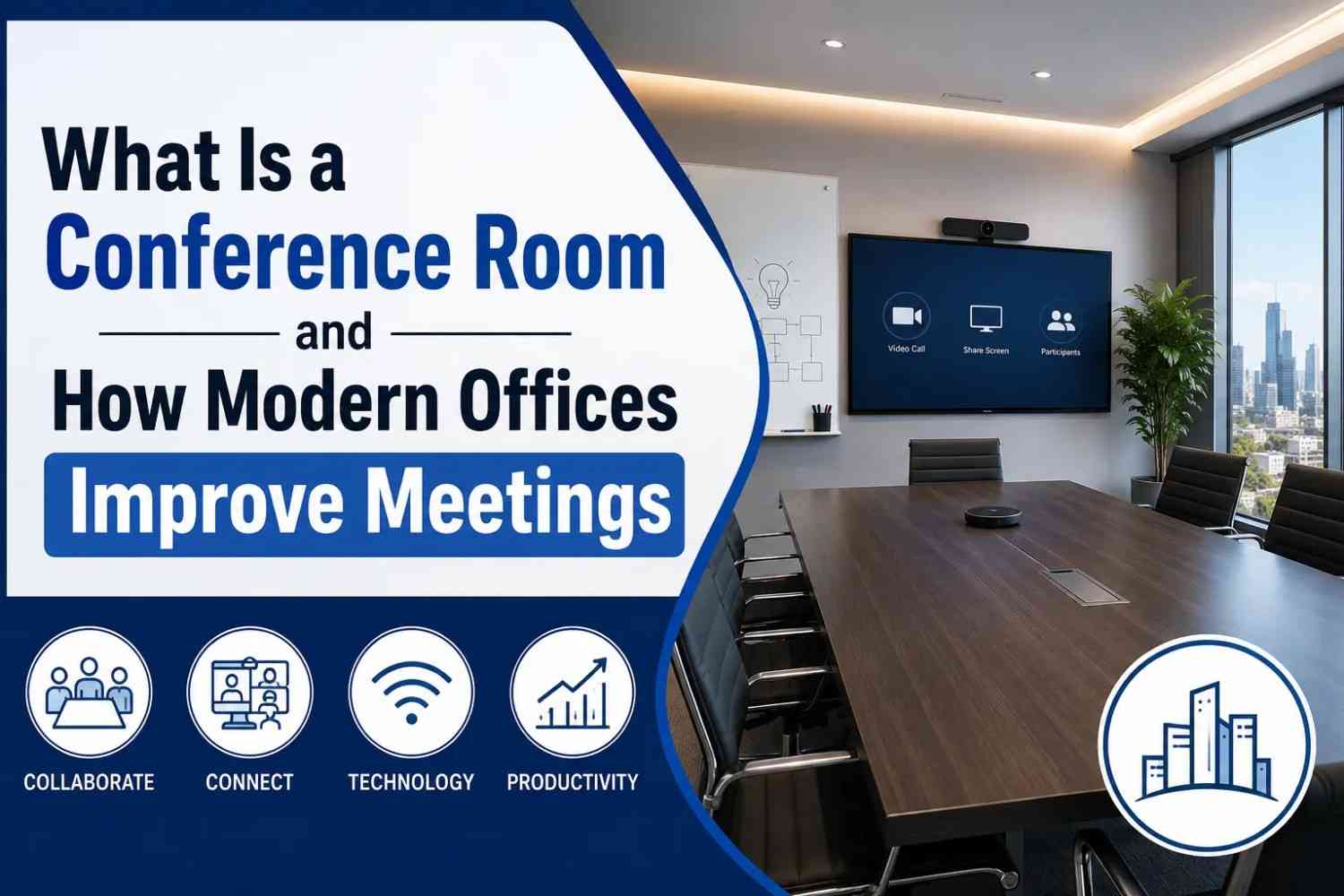
Meetings are where decisions get made, ideas get challenged, and teams figure out what to do next. But a lot of businesses don’t think much about the space those meetings happen in, until it becomes a problem. A room that’s too small, missing basic equipment, or just awkwardly set up can throw off an entire conversation. Here’s a straightforward look at what a conference room actually is, what it needs, and how modern offices are making them better.
A conference room is a private, dedicated space where groups meet, for client calls, team discussions, project planning, or presentations. It’s separate from the open office floor specifically because focus and privacy matter in those moments. For businesses that don’t need a full-time office, conference room rental has become a practical go-to. You book the space when you need it, show up to a professional setup, and skip the overhead of maintaining your own. It works well for freelancers, growing startups, and remote teams who still want a real space for real meetings.
At minimum, a solid table, comfortable chairs, a display screen, and Wi-Fi that actually works. Beyond that, good conference room amenities make a real difference: a whiteboard for thinking out loud, video call capability for hybrid teams, proper lighting, and enough power outlets so nobody’s scrambling. A collaborative workspace isn’t just about fitting people in a room, it’s about giving them what they need to think clearly and work together without unnecessary friction. The little things, done right, keep the focus on the meeting itself.
Conference room size really comes down to how many people are using it and what for. Small huddle rooms, for two to four people, typically run around 100 to 150 square feet, good for quick syncs or one-on-ones. A mid-size room handling six to ten people sits around 200 to 300 square feet, which covers most standard team meetings. Larger boardrooms for presentations or bigger groups can go well beyond 500 square feet. Getting the size right matters, too cramped and people feel uncomfortable, too large and the energy just disappears.
Modern conference room office spaces are built with technology baked in from the start, not bolted on as an afterthought. That means one-touch video conferencing, wireless screen sharing, smart room booking panels, and displays that actually do the job without fuss. Good audio matters just as much, a room where the person on the call can’t hear clearly kills productivity fast. When office spaces integrate technology the right way, it fades into the background. Nobody’s troubleshooting mid-meeting. The tools just support the conversation, quietly and reliably.
The difference between a frustrating meeting and a productive one often comes down to the space. Right size, right tools, right setup, it sounds simple, but it takes real thought to get there. Businesses that invest in proper meeting environments, whether through their own build-out or by using shared conference room rentals, consistently get more out of their team time. If you’re looking for that kind of space without the hassle of managing it yourself, Princeton City Office offers conference rooms and collaborative workspaces designed to support the way modern teams actually work.
A conference room provides a dedicated space for meetings, presentations, client discussions, brainstorming sessions, and team collaboration. Unlike open workspaces, it offers privacy, fewer distractions, and the tools needed for productive communication.
A modern conference room should include comfortable seating, a meeting table, high-speed Wi-Fi, video conferencing technology, display screens, power outlets, quality audio systems, and collaboration tools such as whiteboards or digital presentation equipment. These features help support both in-person and hybrid meetings.
Conference room size depends on the number of attendees. Small meeting rooms for 2–4 people typically require 100–150 square feet, medium-sized rooms for 6–10 people need around 200–300 square feet, and larger boardrooms may require 500 square feet or more to ensure comfort and functionality.
Technology improves meeting efficiency by enabling seamless video conferencing, wireless screen sharing, smart scheduling systems, and clear audio communication. Modern conference room technology supports remote collaboration and helps businesses conduct meetings without technical disruptions.
Yes. Conference room rentals allow businesses to access professional meeting spaces on demand without the cost of leasing, furnishing, and maintaining a dedicated office. This option is popular among startups, remote teams, consultants, and freelancers who need occasional meeting space.