
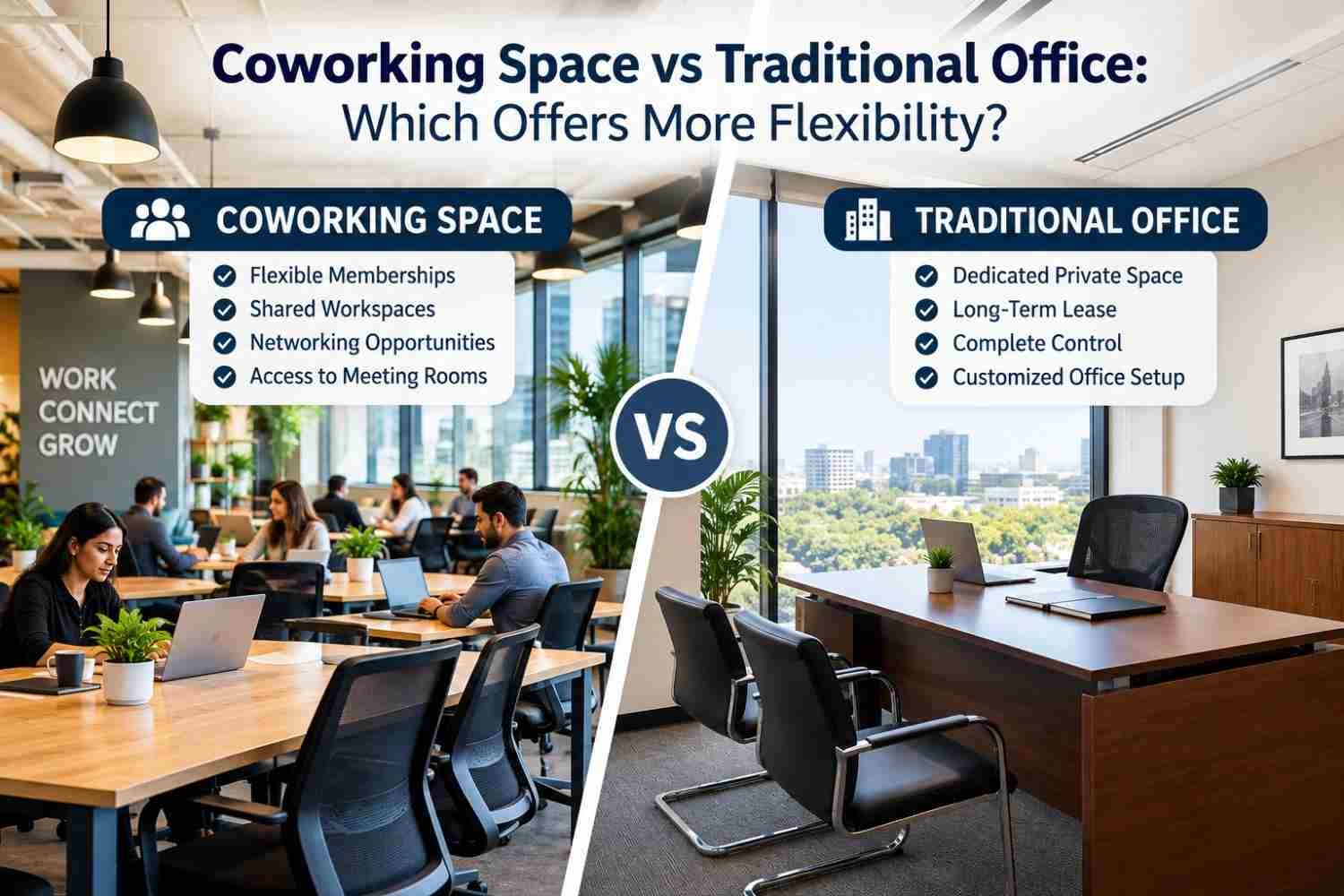
Picture this. You sign a three-year lease on an office, buy the desks, set up the Wi-Fi, and six months later your team either doubles or half of them decide they’d rather work from home. Now you’re stuck holding space that doesn’t fit you anymore. Sound familiar? It’s exactly why so many people are rethinking the whole coworking space vs. traditional office question.
Here’s the honest take. A traditional office gives you control and a place that’s completely yours. A coworking space gives you room to change your mind. Neither is wrong, but one is a lot easier to walk away from. Let’s look at where flexibility really comes from, how the business works behind the scenes, and what you should know about meeting rooms.
Flexibility is what members love, but it’s also what makes the whole model tick.
They can be, though it’s not a guaranteed win. Think of a coworking space like a busy café. It doesn’t depend on one big customer. Money comes in from memberships, private offices, day passes, and meeting room bookings, so when one member leaves, the whole thing doesn’t wobble. That said, plenty of owners have opened their doors, waited for people to show up, and been disappointed. The ones who do well usually know exactly who they’re building for and keep a close eye on costs from day one.
It comes down to a few simple things. The location is huge. People want somewhere easy to reach, with parking and a decent lunch spot nearby. Then there is the mix of members. A blend of freelancers, small teams, and remote workers keeps desks filled on Mondays and Fridays alike. Add the basics done well, like fast internet, comfy chairs, and a friendly face at the front desk. Finally, extras such as meeting rooms and event space bring in more without needing extra square footage. Get those right and people tend to stick around.
Here’s where coworking flexibility really shines. You get a proper, professional room exactly when you need it, and you don’t have to keep one sitting empty the rest of the month.
It’s easier than you’d think to book meeting rooms. Most places let you check what’s free online or by asking at the front desk. You pick a time, confirm, and you’re set. Members often get first dibs, but many spaces welcome guests too. Tell the team what you’re planning, whether it’s a client pitch, an interview, or a team workshop, and they’ll usually point you to the right room. Here’s a tip that saves a lot of hassle: book early if you’re eyeing a busy day, and let the team know what you’ll need, whether that’s a screen, a whiteboard, or a round of coffee. That way, nothing surprises you five minutes before the client walks in.
Start with size. Too small feels cramped, and too big feels strange with only three people. Check the tech next, because nothing kills a meeting faster than a video call that keeps freezing. Think about where the room is, too, especially if a client is driving in and needs easy parking. Notice the vibe as well. A quiet, tidy room says a lot about you before you even open your mouth. And ask about cancellations and running over, so a meeting that goes long doesn’t turn into an awkward scramble.
If you’re on the other side of the desk and thinking about running a space yourself, here’s what matters.
Know your people first. A coworking space for creative freelancers feels nothing like one for growing startups. Then keep things running smoothly with simple booking, quick replies, and clean shared areas. But don’t stop there. Community is the secret ingredient. Host a casual coffee morning, introduce members to each other, and actually listen when they give feedback. People rarely leave a place where they feel like they belong.
Honestly? Consistency. Members notice when the coffee runs out, the printer jams, or the Wi-Fi crawls, and those little things add up fast. You also need flexible terms, since flexibility is the whole reason people pick coworking over a traditional office. Be upfront in how you communicate, keep improving as needs change, and be patient. Trust and full desks build over months, not overnight.
So, which one gives you more flexibility? For most growing businesses, coworking wins. You can add a desk when someone new joins, book a meeting room the week a client visits, and walk away without a fight if plans change. A traditional office still makes sense if you have a steady team and want every corner to feel like your own. It really comes down to where your business is headed, not just where it is today. If you’re leaning toward flexible space in New Jersey, Princeton City Office is worth a visit, close to the Holiday Inn Princeton by IHG.
A coworking space can be worth it for remote workers who need better focus, fewer distractions, professional meeting facilities, or more separation between work and home life.
Coworking spaces can provide a more professional and structured environment, reliable internet, meeting rooms, and networking opportunities, while working from home offers greater convenience and no workspace membership cost.
Coworking space costs vary depending on location, membership type, and amenities. Remote workers can typically choose from day passes, flexible memberships, dedicated desks, or private offices.
Remote workers should consider reliable Wi-Fi, quiet work areas, meeting rooms, private spaces, comfortable seating, useful office amenities, flexible memberships, and a convenient location.