
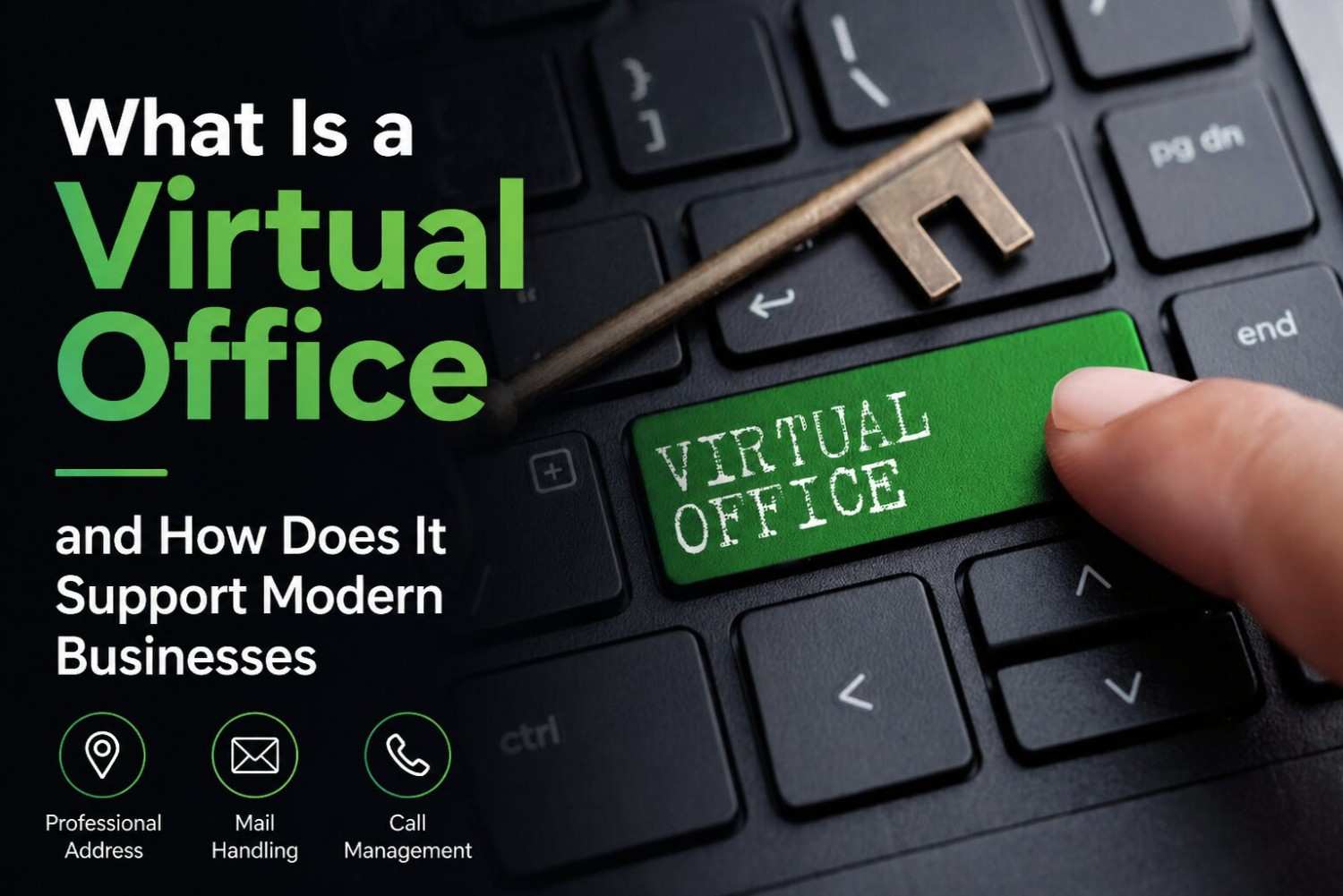
Running a business today looks nothing like it did ten years ago. More teams are working remotely, more founders are bootstrapping from home, and more companies are asking whether a long-term office lease actually makes sense anymore. For a lot of them, it doesn’t. That’s where a virtual office comes in — not as a shortcut, but as a genuinely practical way to keep your business professional and operational without the costs that come with a physical space. If you’ve been wondering whether a virtual office could work for your business, this guide covers everything you need to know: what it is, how it actually works, how to get set up, and what you stand to gain from it.
A virtual office gives your business a real, professional address and access to key office services — without requiring you to show up anywhere. You’re not renting a desk or a room. You’re getting the infrastructure that makes a business look credible and run smoothly: a registered address, mail handling, phone answering, and sometimes access to meeting rooms when you need them. It’s a practical solution for freelancers who want to stop using their home address on invoices, for startups that need to look established before they technically are, and for growing companies that want a presence in a new city without the commitment of a physical lease.
When you sign up with a virtual office spaces provider, they assign your business a real street address — not a P.O. box — that you can use on your website, business cards, and official documents. Any mail that arrives there gets handled on your behalf, either forwarded to you physically or scanned and sent digitally. Many providers also include a receptionist service, meaning actual people answer calls in your company’s name and route them appropriately. If you ever need a physical space for a client meeting or team catch-up, most providers let you book conference rooms by the hour. Your daily work stays remote, but your business shows up where it counts.
Setting up virtual office services is more straightforward than most people expect. Start by identifying what your business actually needs — a basic mail-handling address, a full receptionist package, or something in between. Then compare providers based on location, reputation, and what’s included in each plan. Choose an address that fits your market; a city-center address in a recognized business district carries more weight than a suburban one for most industries. Once you’ve selected your package, update your address everywhere it appears — your Google Business Profile, your website, your contracts — and connect whatever communication tools your team relies on. Most businesses are fully set up within a couple of days.
Obviously, the most beneficial thing about virtual office rental is the cost. You’re not paying for square footage, utilities, cleaning, or any of the other expenses that come with a physical office. But the advantages go further than that. A professional business address builds trust — customers and partners are more likely to take you seriously when you’re not operating out of a Gmail account with a home address. Your team gets to work from wherever suits them best, which tends to improve both productivity and retention. Mail and calls get handled without you having to manage them personally. As your business grows, you can scale your services up without any of the issues that come with moving to a bigger physical space.
A virtual office works because it solves a real problem: how do you build a credible, functioning business without locking yourself into expensive infrastructure before you’re ready? It gives you the address, the support, and the professional image of a traditional office — on terms that actually make sense for how modern businesses operate. Whether you’re a solo consultant, a small team working across different cities, or an established company looking to cut overhead, it’s worth considering seriously. Remote and flexible working has continued to grow. Among this growth, many businesses have turned to virtual offices as one of the more practical solutions available. If you are seeking a reputable source, Princeton City Office provides virtual office services that allow you to have a professional appearance without incurring the overhead costs associated with traditional office space.
Absolutely. A virtual office provides a real street address, not a P.O. box, making it fully legitimate for business registration, client communication, and official documents. Banks, partners, and customers treat it as a credible business presence. It’s a widely accepted solution used by freelancers, startups, and established companies worldwide.
For many businesses, yes. If your team works remotely and client meetings are infrequent, a virtual office covers everything — professional address, mail handling, and phone answering. When in-person interaction is needed, most providers offer bookable meeting rooms. It eliminates overhead without sacrificing professionalism or operational capability.
Using your home address on invoices, contracts, or your website exposes personal information publicly. A virtual office gives your business a separate, professional address, keeping your home details private. This boundary protects your privacy, builds client trust, and presents a more polished image — all without renting physical space.
Most businesses are operational within 24 to 48 hours of signing up. Once you select your plan and address, you can immediately update your website, business cards, and Google Business Profile. There’s no renovation, lease negotiation, or setup delay — making it one of the fastest ways to establish a professional business presence.